| Notes |
- William Henry (1774-1836)
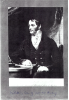
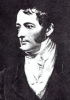
Thomas Henry's son, William was born in Manchester on 12 December 1774. There is a record of the baptism of a Wm. Henry on 10 January 1775 at St Ann's Manchester, when his parents were named as Thomas and Mary Henry. The account which follows of William Henry's life is drawn largely from the biography [5] written by his son William Charles Henry. It is in the very formal style of the times and contains few details of his personal life. William sustained a serious injury as a boy when a heavy beam fell on him. This injury gave him pain all his life and limited his physical activity. As a consequence he was drawn to reading and study as his son relates:
"His fortitude, while yet a child, in supporting the sudden paroxysms of pain, which were often so intense as to oblige him to rest in the streets, was most remarkable. In his efforts to banish the perception of his physical sufferings by an absorbing mental occupation, he manifested that energy of resolution and purpose, which throughout life compelled a feeble bodily frame to keep pace with the exertions of an ardent and unfatigued spirit."
William's early education was from the Rev. Ralph Harrison who taught Latin and Greek. When an Academy was established in Manchester, Harrison was offered the chair of classical literature and William Henry, although under the usual age of admission, followed him there. Although competing with older pupils, in due course William won as a prize a copy of the works of Vergil. On leaving the academy he took an apprenticeship with Dr. Percival a physician and scholar. Dr. Percival suffered from poor eyesight and violent headaches. William Henry would read aloud to Percival and then take dictation. In this way he became familiar with Percival's correspondence with numerous men of science and literature. Percival guided William Henry in his reading of philosophy. In later life William looked back with great affection on his time with this eminent mentor.
William remained with Dr. Percival for five years. Towards the end of this period he began to study disease at Manchester Infirmary under Dr. Ferriar. Teacher and pupil developed a strong relationship, so much so that in later years Ferriar asked William Henry to be his medical attendant in his final illness. In the winter of 1795-6 William went to Edinburgh to study medicine.
In the 18th century only Anglicans could attend Oxford and Cambridge. Nonconformists able to afford university education in medicine went to Leiden in the early 18th century to study in the school made famous by Boerhave, a pioneer of clinical medicine. In the late 18th century Edinburgh provided the most modern medical education in Britain. Oxford and Cambridge remained in the classical tradition of learning the works of Galen, who had been physician to the Roman Emperor, Marcus Aurelius. Contact with patients was not essential. The Royal College of Physicians was established to regulate the profession in London and restricted its membership to fifty fellows and fifty associates who had to be educated in Oxford or Cambridge. This measure was to counter the threat of Edinburgh educated men.
When William Henry went to Edinburgh it was well known to be the premier university for medicine and science. As related by his son:
"The chair of chemistry was still occupied by the venerable Dr. Black, whose discovery of the facts that establish the existence of heat in a latent form, and whose successful discrimination between the caustic earths and their carbonates, had raised him to the highest rank among chemical philosophers."
Although attending primarily as a medical student, William Henry went to Black's lectures and his love of science was strengthened. He was also influenced by Dr. Gregory who held the chair of Practical Medicine. Following his time in Edinburgh, William joined his father, in medical practice in Manchester. He also helped to run the chemical business his father had established. His first contribution to science was made when he communicated a paper to the Royal Society in 1797. This was to try to establish that carbon was an element.
In 1800, William published in the Philosophical Transactions some work on muriatic acid gas (hydrogen chloride). At that time it was believed that all acids must contain oxygen. Oxygen was named from the Greek for acid maker. By 1800 it was known that muriatic acid gas was produced when common salt was heated with sulphuric acid. This gas dissolved readily in water to produce muriatic or marine acid. By analogy with sulphuric and nitric acids, it was assumed that this must contain oxygen. Many attempts were made to remove the supposed oxygen from muriatic acid gas and William Henry came close to solving the problem some years before the matter was clarified by Humphrey Davy in 1810.
William Henry experimented with muriatic acid gas by exposing it to repeated electrical discharges. When he conducted the experiment over mercury he obtained a reduction in volume. Hydrogen was produced together with a white solid which proved to be calomel (mercury I chloride). He repeated the experiments with a mixture of muriatic acid gas and oxygen when he obtained a greater reduction of volume. We can interpret this as caused by the decomposition of hydrogen chloride and the reaction of the hydrogen with oxygen to give water while the chlorine liberated combined with the mercury. When he performed the same experiment in the absence of mercury he found that chlorine was formed. As his son recounts:
"It is manifest that these experiments, had they been justly interpreted, were sufficient to establish the true view of the composition of muriatic gas. Yet governed by the theory of acidification then universally prevalent, Dr. Henry referred the disengagement of hydrogen to the decomposition of water which was supposed to be still present in the muriatic acid gas even though it had been dried by a weeks' contact with fused chloride of calcium."
However, when Humphrey Davy finally proved that muriatic acid gas was a compound of only hydrogen and chlorine, William Henry was quick to support him and in a paper written in 1812 supplied some supporting evidence. He showed that the same amount of hydrogen was produced from electrolysing muriatic acid gas whether it was dried or not. Moreover he found that if the gas was electrolysed in the absence of mercury and any unreacted hydrogen chloride removed by allowing it to dissolve in water, he obtained one hundred parts of chlorine and one hundred and forty parts of hydrogen. We now know that the volumes should have been equal but the solubility of chlorine in water is sufficient to account of the discrepancy. However, William went on to show that in the electrolysis of the gas over mercury, for each part by volume of hydrogen produced, two parts by volume of hydrogen chloride were consumed [6].
In 1803, William Henry reported his experiments on the absorption of gases by water at different temperatures and pressures. Initially he performed all his experiments at 55 degrees Fahrenheit. He showed that at higher temperatures less gas was absorbed. When he experimented at different pressures he discovered the law [7] that now bears his name. He showed for example that if the gas was compressed to twice the normal atmospheric pressure, twice as much was dissolved.
William's physical health made it difficult for him to work in general practice and so he returned to study in Edinburgh in 1805 and was awarded the diploma of Doctor in Medicine in 1807. In addition to his medical studies he attended lectures on physical science and took in moral philosophy. At this time Edinburgh was attracting a wealth of talent among both teachers and students and the atmosphere was very stimulating. Among William's contemporaries was Roget, a medical man now best known for his Thesaurus and who, along with William Henry, became a member of the Portico Library in Manchester.
On his return to Manchester, he continued his research into gases and in 1808 described in Philosophical Transactions equipment that would allow the combustion of larger quantities of gas than had been possible in the early tubes. In that year he was elected a Fellow of the Royal Society. In 1809 he received the Copley medal from the Royal Society. The records of the Portico Library show that William Henry lived at 44 King Street at this period. He continued the type of experiments performed earlier to investigate the constitution of ammonia. He showed that dry ammonia when exposed to electric discharges doubled [8] in volume. By averaging the results from eight experiments he found the ratio was 100 to 198.78.
He also found a way of analysing ammonia by subjecting it to an electric discharge with addition of oxygen in two stages to consume the hydrogen liberated in the production of water [9] . He found that if the whole of the oxygen was added at once, ammonium nitrate was produced and this prevented the complete breakdown of the ammonia charge.
William Henry was very interested in the gases produced by the destructive distillation of coal and oil. He analysed their constituents and studied their suitability for lighting. He showed that such gases were a mixture of carbonic oxide (carbon monoxide), carburetted hydrogen (methane), hydrogen, olefiant gas (ethene) with some carbonic acid gas (carbon dioxide) and sulphuretted hydrogen (hydrogen sulphide). As a result he found himself at variance with some other authors who maintained that olefiant gas was the sole compound of carbon and hydrogen and that coal gas contained only a mixture of olefiant gas and hydrogen. In 1821 William Henry published in the Philosophical Transactions a proof of his original views. John Dalton, Humphrey Davy, Dr. Thomson and himself had all examined the gases bubbling to the surface in marshes and from coal mines and found them to be the same substance which they called carburetted hydrogen. William Henry then proceeded to show that carburetted hydrogen was different from olefiant gas by examining their reactions with chlorine.
Carburetted hydrogen, in the absence of light, was not attacked by chlorine, whereas olefiant gas under the same circumstances was completely consumed. He thus had a means of removing olefiant gas from mixtures and after performing a set of experiments with known mixtures of various gases was in a position to perform analyses on unknown mixtures of coal and oil gases. In the best oil gas, forty percent was removable by chlorine while the best coal gas was reduced by only thirteen percent. He was not able at first to analyse in detail the composition of the remaining gas - a mixture of carbon monoxide, hydrogen and methane. However he followed the work of Dobereiner who had shown the use of finely divided platinum in catalysing reactions of gases. William showed that at 340 degrees Fahrenheit, platinum would catalyse the reaction of carbon monoxide, hydrogen and oxygen to produce carbon dioxide and water. There was no reaction under these conditions with his carburetted hydrogen (methane). By measuring the water and carbon dioxide produced he could estimate the original quantities of carbon monoxide and hydrogen and the remaining gas was methane. This he detonated in oxygen and showed that the products were water and carbon dioxide, thus proving that the gas was made up of carbon and hydrogen. During the course of this work he found that some gases reduced the power of the platinum catalyst. This was first observed about this time and first made public by Turner.
In 1824 he published in Manchester Memoirs an essay on compounds of nitrogen in which he described an improved method for showing the constitution of nitrous oxide by detonating it with carbon monoxide. His son recalls very eloquently in his biography how the work on gases at this time was the cutting edge of chemistry.
"At the period when Dr. Henry's interests were first awakened for philosophical pursuits, the rapid discovery by Priestley of several new gases, and the sanguine hopes inspired by Beddoes (discovery of nitrous oxide) of detecting in these subtle and hitherto concealed forms of matter powerful remedial agents, urged both physiologists and chemists to engage with ardour in pneumatic researches. Subsequent experience has demonstrated it is true, the unsoundness of these projects for enriching with new resources, the art of practical medicine. But the beautiful law, unfolded by the genius of Gay Lussac, that the gases combine in volumes which are either equal or multiples by an integral number, by establishing, when interwoven with the Daltonian philosophy, the existence of some simple relation between the number of atoms existing [10] in equal spaces of aeriform matter, has almost elevated the pneumatic chemistry to the dignity and exactitude of a mathematical science. It may be safely affirmed that Dr. Henry's habits of extreme mental accuracy, his unrivalled manual expertise and the general tendencies of his tastes towards elegance and precision, peculiarly qualified him to excel in conducting such delicate enquiries."
William Henry did not entirely restrict himself to the chemistry of gases. He undertook analysis of various sources of salt. As his son admits, his views on the nature of heat as a form of matter had been eclipsed but his views on the decomposition by electricity were recognised by chemists such as Berzelius. The extent of his knowledge of general chemistry was shown by his text book [11] of chemistry, which became a standard work for students. The book was dedicated to John Dalton, the president of the Manchester Literary and Philosophical Society. By 1829 it had passed through eleven editions.
As a medical man, William Henry worked as a physician to the Manchester Infirmary and contributed articles to medical journals. He was particularly interested in diseases of the urinary tract. In connection with this he studied uric acid, analysed bladder stones and wrote an essay on diabetes. Although he had given up active participation in medicine towards the end of his career, his interest was stimulated by the arrival of Asiatic cholera in Europe. He showed the destruction of certain types of contagion by heating and communicated to the British Association his preliminary findings and ideas he had formed about contagious diseases from his extensive reading.
Like many scientists in this period he was enthusiastic about classification. He was interested in botany and mineralogy and formed a collection of minerals specimens. This led him to the study of geology and shortly after the formation of the Geological Society of London he was elected a fellow. He was not engaged in original research in the field but had a keen interest in the field and continued to collect minerals and fossils in his later years. As he grew older he was less able to continue with active experimentation in chemistry but continued to maintain an interest in the science and in literature. He enjoyed travel books, biographies particularly of philosophers, poetry and music.
In his later years when he was less able be active in research and his son records:
"One of his designs was a work that should assemble the beneficent provisions in the Chemical Economy of Nature, which establish the existence and attributes of an All-wide Governor of the Material Universe."
He also had in mind a project on the history of chemical discovery since the middle of the 18th century and collected notes on Scheele, Cavendish, Black, Priestley and Lavoisier. He published a biographical note on Priestley in the first volume of the reports of the British Association and intended it to be the first of a series on notable chemists. William Henry and John Dalton helped to found the British Association for the Advancement of Science in 1831.
In the final section of his account William Charles Henry states that it is not necessary to describe to his many friends a detailed portrait of his moral excellencies. However, we form the impression that he was somewhat shy and reserved with strangers, who often thought him cold. This is perhaps not surprising in a man with such physical infirmities since his youth. He appears to be a man who could not be induced to relax. He regretted that his lifelong struggle with pain and digestive disorders had reduced his capacity for scientific and literary creativity.
Through the polished formal prose of his son, in the year that Queen Victoria succeeded to the throne, we glimpse William Henry but imperfectly. We learn nothing of his marriage or his family life.
"In the general intercourse of society, Dr. Henry was distinguished by a polished courtesy, by an intuitive propriety, and by a considerate forethought and respect for the feelings and opinions of others - qualities issuing out of the same high-toned sensibility, that guided his tastes in letters, and that softened and elevated his whole moral frame and bearing. His comprehensive range of thought and knowledge, his proneness to general speculation in contradistinction to detail, his ready command of the refinements of language and the liveliness of his feelings and imagination rendered him a most instructive and engaging companion."
In summing up his father's scientific achievements, William Charles Henry notes that his greatest contribution may have been his ingenuity in devising instruments and methods of research and by his skill in using them. He was tempted to speculate what his father might have achieved had he enjoyed more robust health and if he had not divided his efforts between medicine, chemistry and running the family business. However, such speculation is without value for had William Henry been more robust he might not have devoted his life to intellectual pursuits. Moreover his business interests in making soda water almost certainly led to his studies on the absorption of gases by liquids.
William Henry's experiments with hydrogen chloride were sufficient to explain its chemical constitution but it was Humphrey Davy in 1810 who took the prize. Henry's work on gases might easily have led him to formulate the law that when gases react they do so in simple proportions by volume but it was Joseph Louis Gay-Lussac (1778-1850) the French chemist who grasped this truth. This principle, together with Dalton's work on atomic theory, led the Italian chemist, Amedeo Avogadro [12] (1776-1856) to his hypothesis that equal volumes of all gases under the same condition contain the same number of molecules. Avogadro then created the modern system of chemical formulae by appreciating that the formula for water must be H2O not HO as first imagined by Dalton. If William Henry did not stand in the first rank of the scientists of his age, he was close behind them. His work is still commemorated in Henry's Law and his text book influenced a generation of chemists in the first part of the 19th century.
When we look at the summation of William Henry's interests in chemistry, botany, geology, medicine, literature and business, together with his role as one of the founders of the British Association for the Advancement of Science, and as Vice Chairman of both the Literary and Philosophical Society and the Natural History Society of Manchester, we perceive that he was at the forefront of intellectual life in Manchester in a period when it becoming the first industrial city in the world.
|
 Barker - Humphrys Family Tree
 1774 - 1836 (61 years)